
The Door: A Symbol of Threshold and Becoming

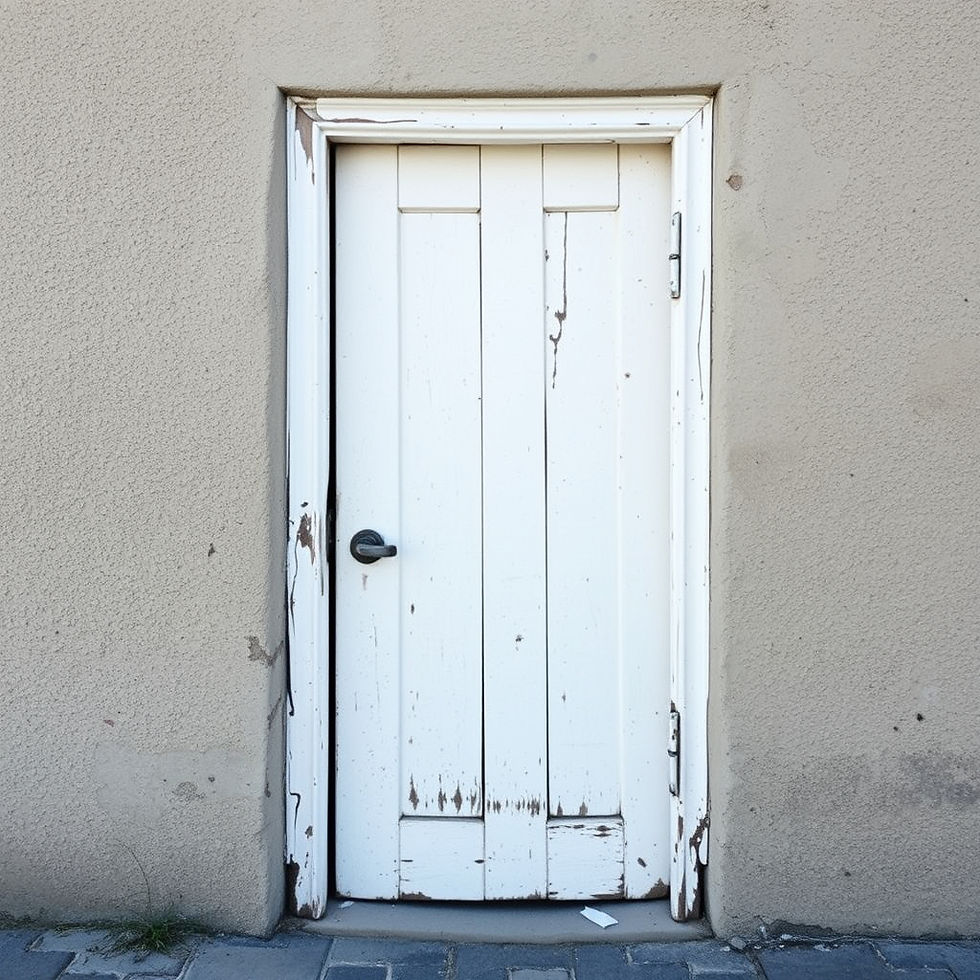
There are some symbols that seem to speak to us before we have had time to think about them. The door is one of them.
A door is such an ordinary thing. We pass through doors every day without much thought. We open them, close them, lock them, knock on them, wait behind them, stand outside them. And yet, in dreams, myths, stories and the inner life, a door is rarely just a door.
It is a threshold.
It marks the place between one world and another. Inside and outside. Known and unknown. Safety and risk. The life we have been living, and the life that may be waiting.
A door may appear when something in us is on the edge of change. We may not yet know what is changing. We may simply feel restless, uncertain, called, or afraid. There may be a sense that something has ended, but the new thing has not yet taken shape. In that in-between place, the image of a door can carry great power.
It may ask: are you ready to enter?
But it may also ask: are you ready to leave?
Not every door is open. Some doors are locked. Some are hidden. Some are forbidden. Some are only slightly ajar, allowing a strip of light to fall across the floor. A closed door may frustrate us, but it may also protect us. It may represent a boundary that needs to be respected, a part of the self that is not yet ready to be known, or a mystery that cannot be forced.
In therapy, I am always interested in the feeling around the symbol. Is the door inviting or threatening? Is it old or new? Heavy or fragile? Is it familiar, like the front door of a childhood home, or strange and unknown? Are you inside looking out, or outside wanting to come in? Do you have the key? Are you knocking? Is someone, or something, on the other side?
These details matter because symbols are never fixed. A door does not mean the same thing for everyone. For one person, it may suggest freedom. For another, exclusion. For another, danger. For another, hope.
A locked door in a dream might speak of something withheld, perhaps an emotion, memory or possibility that remains out of reach. But it might also say: not yet. The psyche has its own timing. It often protects us until we have enough strength, support or understanding to open what has been closed.
An open door can feel full of promise. It may suggest welcome, invitation, or permission. But even an open door can be frightening. There is still the question of whether we dare to cross the threshold.
Many of us know what it is to stand at the edge of change. To remain where we are may feel too small, but to move forward may feel frightening. A part of us longs for the new room. Another part wants to stay with what is familiar, even if the familiar no longer nourishes us.
This is often how change happens. Not in one grand gesture, but at the threshold. We hover. We hesitate. We imagine. We retreat. We approach again.
The door may also symbolise choice. Once we go through, something may be different. We may not be able to unknow what we discover. We may not be able to return to exactly the same version of ourselves. This is why doors appear so often in fairy tales and myths. The hero or heroine opens the forbidden door, enters the hidden chamber, passes through the gate, crosses into the forest, the underworld, the castle, the unknown.
A door invites movement, but it also asks for consciousness. What am I entering? What am I leaving behind? What part of me is ready? What part of me is afraid?
There is also something deeply intimate about a door. It suggests privacy. What happens behind closed doors belongs to the inner world. Our homes have doors. Our bedrooms have doors. Therapy rooms have doors. The door protects the sacredness of the space within.
So perhaps a door can also ask: what needs a boundary? What needs to be kept safe? What needs to be opened, and what needs to remain private?
In the inner life, the door may stand at the entrance to a forgotten room of the psyche. A place where old grief, buried anger, unlived creativity or childhood longing has been waiting. Sometimes we spend years walking past such doors, sensing something behind them but not quite daring to turn the handle.
And then, one day, something changes. A dream comes. A symptom speaks. A relationship breaks open. A book, a conversation, a piece of music, a moment of silence,
touches something in us. The door appears again.
This time, perhaps, we pause.
We listen.
We place our hand on the handle.
The deeper question is not simply, “What does a door mean?” The more useful question is, “What does this door mean to me, now?”
Where in my life am I standing at a threshold?
What door have I been afraid to open?
What door may need to close?
What am I waiting for permission to enter?
And if I crossed the threshold, what part of me might finally begin to live?


Comments